


Prevent Mass Recalls with In-Line Leak Testing
In high-volume manufacturing, a single compromised seal or hairline crack in a fluid control component can cascade into a catastrophic field failure. For producers of valves, fittings, and faucets, quality control isn't just about meeting specifications; it is about risk mitigation.
When evaluating production lines, manufacturers frequently face a critical choice in quality assurance methodology: traditional off-line batch sampling versus fully integrated in-line leak testing.
The Hidden Cost of Off-Line Batch Sampling
Traditionally, many assembly operations relied on off-line testing. Under this model, a random sample of finished valves or fittings is pulled from the production run at set intervals and moved to a separate test bench.
While off-line testing confirms that some parts meet quality standards, it leaves glaring vulnerabilities:
- The Blind Window: Thousands of components may be assembled before a defect is detected on the off-line bench, resulting in massive scrap or rework if an entire batch is flagged.
- Operator Variability: Manual handling, inconsistent fixture seating, and human judgment during offline testing introduce avoidable error rates.
- Delayed Feedback Loops: By the time a sealing failure is traced back to a misaligned press or worn tooling, the production line has already turned out hours of defective inventory.
The Advantage of Automated In-Line Leak Testing Systems
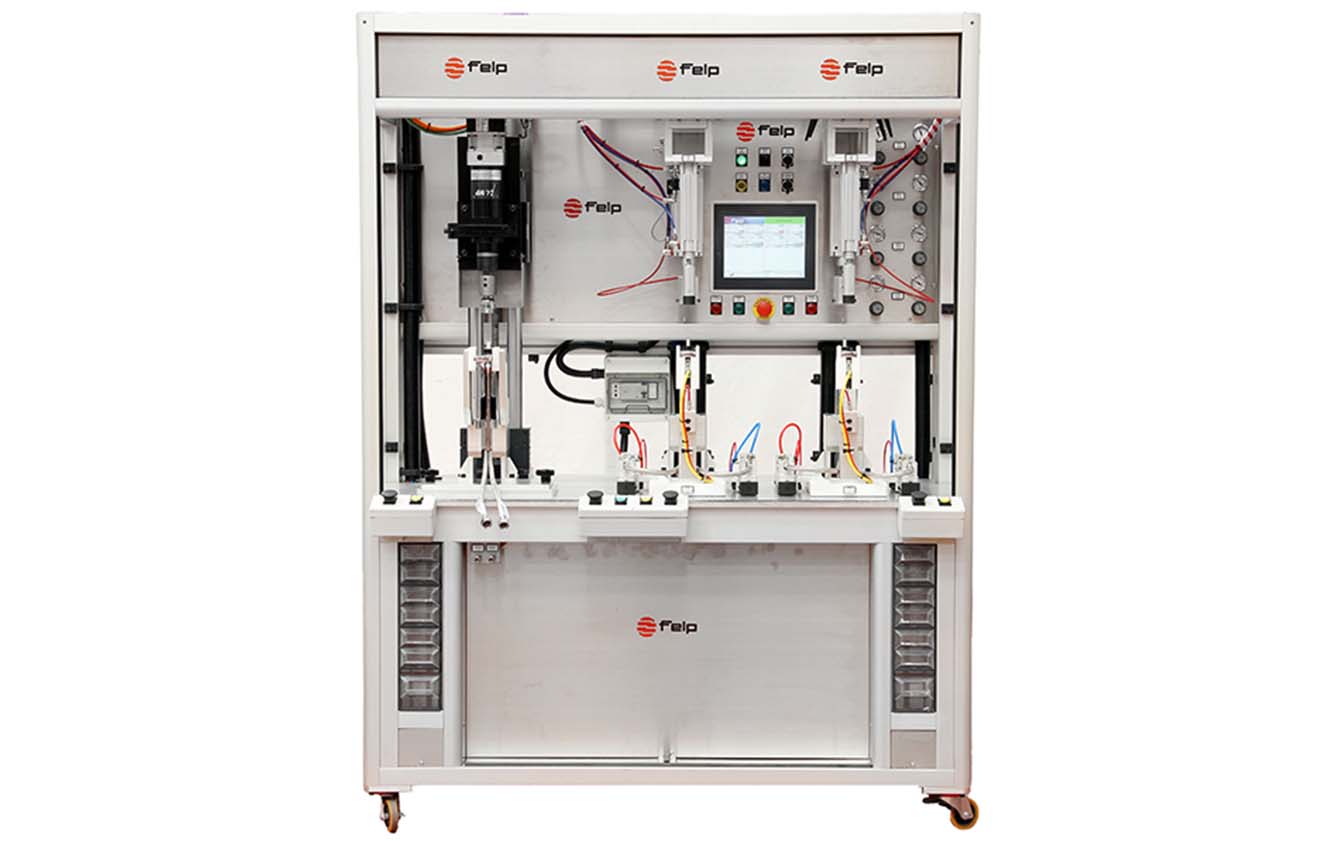
Modern industrial automation eliminates these blind spots by embedding testing directly into the assembly choreography. In an automated valve test bench engineered by FELP, components are subjected to rigorous pressure or helium leak detection before they ever leave the production cycle.
Integrating testing directly into the transfer line offers distinct operational advantages:
- 100% Component Verification: Instead of testing one out of every hundred parts, every single valve, fitting, or manifold is tested. Zero unverified parts slip through.
- Immediate Reject Isolation: If a component fails a pressure drop or flow test, the automated system flags and segregates the defective part instantly, halting the cycle or diverting the piece before downstream packaging.
- Traceability and Data Logging: Integrated test benches record specific pressure decay curves and flow metrics for every serial number or cycle, providing vital compliance data for quality audits.
- Optimized Cycle Times: Because automated test stations synchronize with the overall indexing speed of the rotary table or transfer line, 100% testing happens without creating production bottlenecks.
Engineering Out Recalls at the Source
The true power of in-line leak testing systems lies in prevention rather than detection. When test data flows in real time back to preceding assembly, screwdriving, and pressing stations, automated controls can identify micro-trends—such as a gradual shift in pressing force or O-ring seating depth—before they result in actual leaks.
For fluid control manufacturers, partnering with an automation specialist experienced in custom quality control fluid assembly ensures that testing protocols are engineered specifically for your component geometry, material properties, and operational pressures.
Protect Your Brand & Profitability with Custom Automation
Don't let legacy testing methods expose your operation to costly scrap runs, warranty claims, or brand-damaging recalls. At FELP Assembly Systems USA, we custom-engineer turnkey assembly lines and automated test benches tailored to your exact pressure requirements, cycle time targets, and component specifications.
Ready to elevate your quality assurance standards?
Contact our engineering team today at (847) 752-4092 or request a custom quote online to discover how a tailored FELP test bench system can optimize your production line.
